

When you set new goals, you expect them to change one part of your life. Maybe your workouts look different, or maybe your time is carved out a little differently. What you might not expect is how much those new goals can spill into everything else. Over time, they can reshape your routine in ways that feel surprisingly meaningful, and sometimes they can even change how you see yourself.
I have been experiencing that firsthand this past year.
Why New Goals Do Not Always Feel Natural at First
For as long as I can remember, I hated running. I was the kid who dreaded the pacer test and walked the mile in gym class. Even when I played sports like soccer and tennis, I improved by focusing on skills that did not involve a lot of running. Endurance was never something I cared about and definitely not something I trained on purpose.
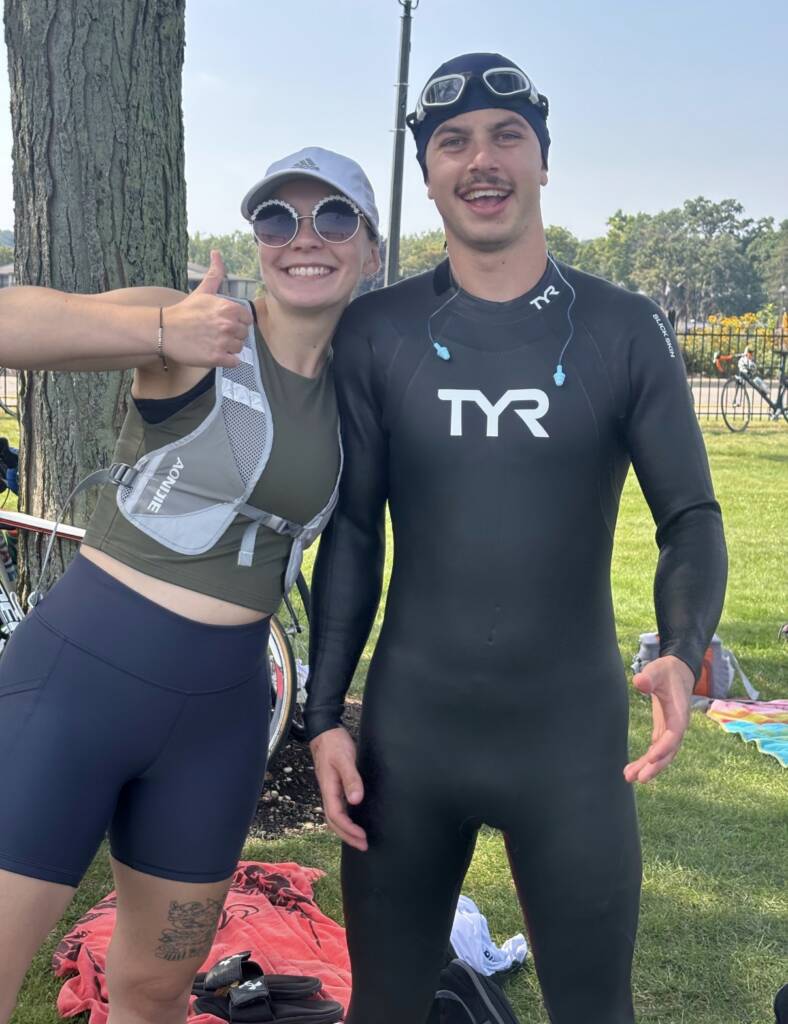
So when I got invited last summer to run a 5K in the fall as part of a triathlon team, it felt pretty out of character for me. Despite that, I decided to take it on anyway.
When I started training over the summer, it was not pretty. My endurance was low, and it felt constantly frustrating. Like a lot of new goals, progress came slowly. There were plenty of times where it would have been easy to stop taking it seriously. But I kept showing up…mostly just because I had committed to the race and did not want to back out.
Eventually, and after a lot of struggles, I reached that 5K goal. And not long after, some friends forced convinced me to sign up for a half marathon the following summer.
When New Goals Start to Feel Like Part of Your Life
Now, while writing this, I am over halfway through a training plan (with our local Fleet Feet) for that half marathon, and the most unexpected thing has happened. I actually enjoy running.
A few weeks ago, I ran 8 miles straight for the first time. This time last year, I could barely get through a mile without needing to walk. Even six months ago, that still felt like a stretch. Somewhere along the way, running slowly stopped feeling like something I had to force and started feeling like a normal part of my week.
A big part of that shift has been the routine that came with these new goals. Having a structured running plan has given my weeks a rhythm that I did not have before. Showing up consistently, especially to group runs, has also brought back a version of myself that I had not tapped into in a while. It feels similar to the athlete mindset I had growing up but applied to something I never thought would be “my thing.”
The Ripple Effect on Your Daily Life
What I really did not expect is how much these new goals would affect everything outside of running.
Planning my week around workouts has made me more intentional with my time. Sticking to the schedule has built a level of discipline that carries into other areas of my life. And maybe most noticeably, I feel more confident. Not just because I am improving physically, but because I am proving to myself that I can follow through on something that once felt out of reach.
In a lot of ways, these new goals have helped me grow into a slightly different version of myself without fully realizing it was happening.

Why Trying New Things Can Improve Confidence and Mindset
That is what I think people underestimate about new goals. They are not just about the outcome, and they are not contained to one area of your life.
New goals create new routines, and new routines disrupt the patterns you have gotten used to. That disruption can be uncomfortable at first, but it also makes space for something different. It reminds you that your days do not have to feel repetitive. You are allowed to try things that do not initially feel like a natural fit.
When you stick with new goals long enough to see progress, it changes your perspective. You start to feel more capable, and that feeling tends to extend beyond the activity itself. It becomes easier to believe that you can handle other challenges, simply because you have evidence that you can.
There is also something powerful about not doing it entirely on your own. Whether it is a structured program, a coach, or just seeing the same people show up each week, being around others who are working toward their own new goals creates a different kind of motivation. It adds accountability, but also a sense of community that makes the routine easier to stick with.
How to Start Setting New Goals for Yourself
If you had told me a year ago that I would be running multiple times a week and genuinely looking forward to it, I would not have believed you. Now it is just part of my life, and I am really glad I gave it a chance.
If there is anything to take from this, it is that trying something new is almost always worth it, even if it feels unlikely or uncomfortable at the start.
You do not need to completely overhaul your life or pick a massive goal right away. New goals can be small. They can be something you have been putting off because it does not feel like “you.” The important part is giving it enough time to actually see what it does to your routine and how it makes you feel.
And if you are looking for support as you work toward new goals, that is exactly what we aim to provide at Summit. Whether it is through personal training or group classes, having that structure and sense of community can make it a lot easier to turn a goal into something that actually sticks.