

Has your fear of falling ever stopped you from finishing a climb? Or your fear of failing—has it ever stopped you from even starting? Have you given up on something because you were too afraid to take a leap?
I’ve experienced all those things more times than I’d like to admit.
For a long time, fear quietly shaped my climbing. Whether it was fear of falling, failing, or embarrassing myself, it all added up and kept me stuck on a plateau, even as I was getting physically stronger.
In the spirit of Mental Health Awareness Month, I want to share what started to change that for me and how I began training something I had ignored for a long time: my mental strength.

How Fear Shows Up in Climbing
Climbing can feel deeply personal. When you fall, it can feel like more than just a fall. It can feel like a reflection of your ability or your progress.
That fear showed up for me in a lot of ways.
Sometimes I’d avoid going back to difficult climbs I had already completed. I didn’t want to deal with the frustration of not being able to do them again. Other times, it showed up socially. I’d hesitate to get on the wall at all, worried about how I looked or what others might think.
And, like many climbers, I had the fear of falling itself. I can think of so many moments where I got close to finishing a climb, only to freeze—fully capable physically but too caught up in fear to try the final move.
Looking back, the common thread wasn’t my physical ability. It was how I responded to fear.
That’s when I realized: if I wanted to improve, I couldn’t just train my body—I had to train my mind too.
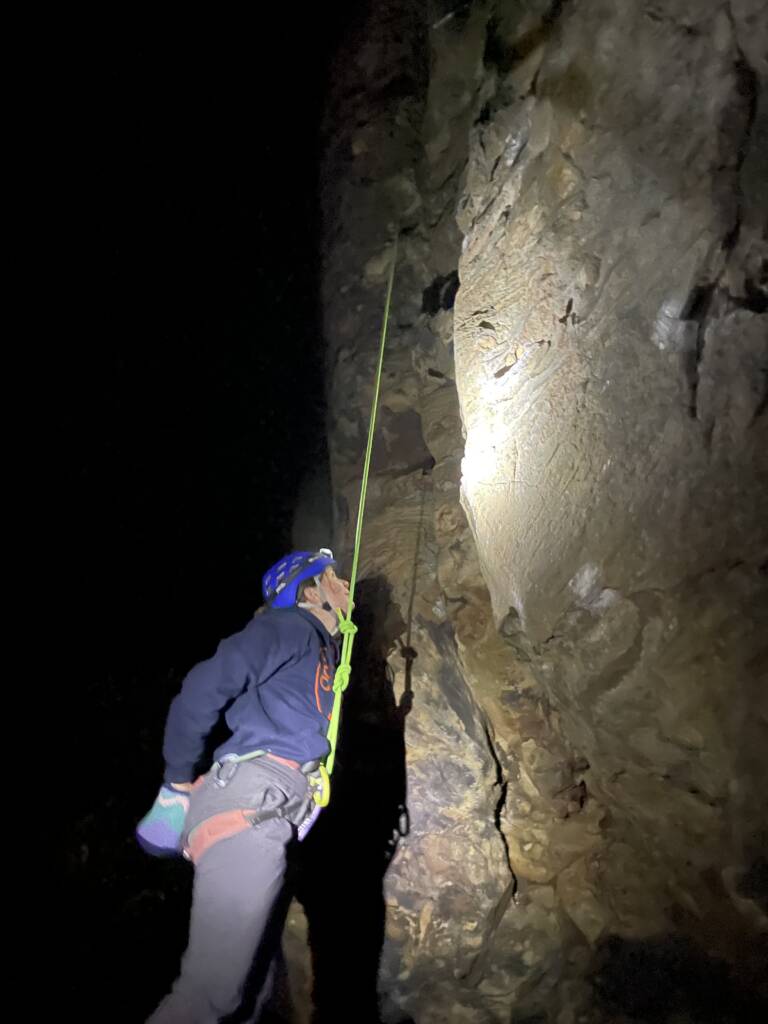
Training Your Mental Strength
We spend a lot of time talking about strength, endurance, and technique in climbing, but mental strength plays just as big of a role. It’s also just as trainable.
Learning to face fear instead of avoiding it was one of the biggest turning points in my climbing. It didn’t happen overnight, but small, intentional changes made a huge difference over time.
Here are a few of the strategies that helped me start building that mental strength.
Practice: Build Familiarity with Discomfort
Fear tends to feel strongest when something is unfamiliar. The more often you safely experience it, the less overwhelming it becomes.
You can start by practicing falls from lower heights and gradually increasing the distance as you build trust. Another helpful approach is trying climbs that feel just out of reach and focusing on making one more move instead of finishing the whole problem.
It also helps to give full effort even on climbs that feel easy. That habit of committing to movement carries over when things start to feel more difficult or intimidating.
The goal isn’t to get rid of fear completely. It’s to learn that you can keep moving even when it’s there.
Community: Don’t Face Fear Alone
Fear has a way of growing when you keep it to yourself. Talking about it with others can make it feel more manageable and more normal.
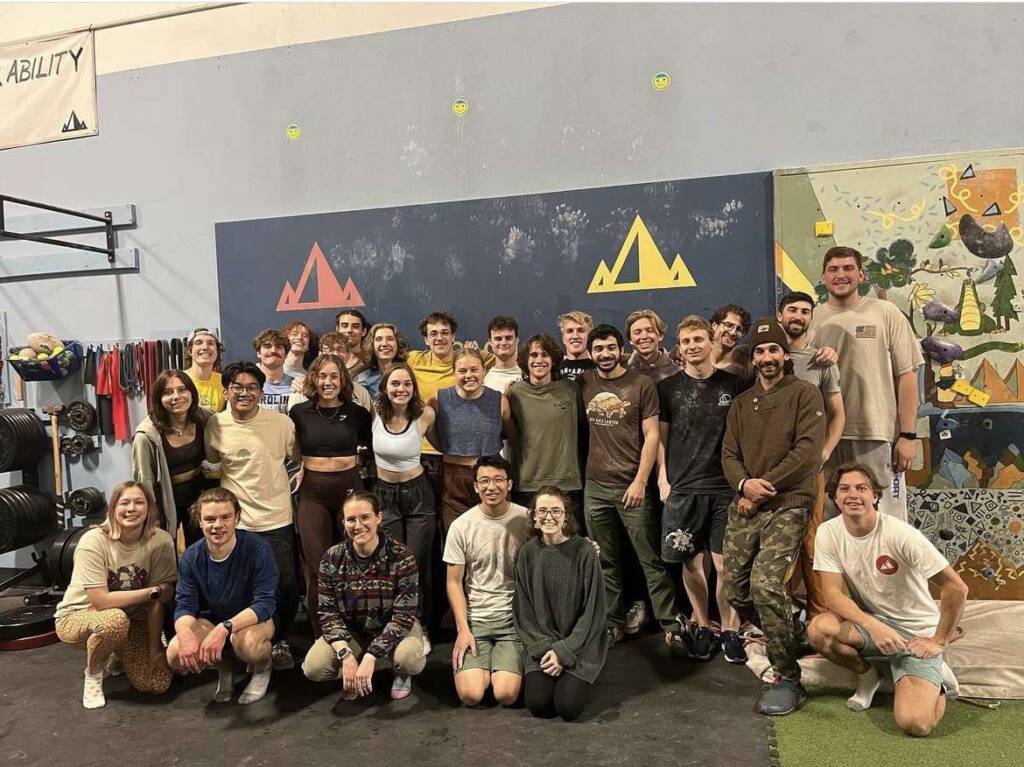
Spending time around climbers of different levels can also be helpful. It quickly becomes clear that everyone is working through something, whether it’s fear, frustration, or self-doubt.
Finding spaces where you feel comfortable being open, whether that’s a class, a club, or a regular group at the gym, can make a big difference. These spaces might look different for everyone, but here are a few places to start:
- Local affinity groups like Madison Women Climbers, Queer Climb Madison, or Madison Climbers of Color
- Clubs like the Hoofer Mountaineering Club through the Wisconsin Union (or other Hoofer clubs for other outdoor sports)
- Joining us here at Summit Strength & Fitness, a climbing and mountain sport-focused gym where you can meet people through classes, events, or just regular sessions
Having people around you who understand what you’re going through makes it much easier to keep showing up and trying.
Reflection: Make Progress Visible
Mental progress can be harder to notice than physical progress, which is why it helps to take time to reflect on it.
After a session, especially one where you pushed yourself, think about how you responded to moments that felt uncomfortable. Did you try something you would have avoided before? Did you stay on the wall a little longer?
Even small changes matter. Acknowledging those moments helps reinforce them and makes it easier to build on them over time.
A Final Thought
Fear doesn’t disappear overnight, and for most people, it never fully goes away.
What can change is how you respond to it.
Progress isn’t just about completing harder climbs. It’s about becoming more willing to try, to fall, and to keep going even when something feels uncertain.
This month, consider giving your mental strength the same attention you give your physical training. Start small, stay consistent, and recognize the effort you’re putting in along the way.
Sometimes the biggest step forward isn’t the climb you finish, but the one you decide to try in the first place.