

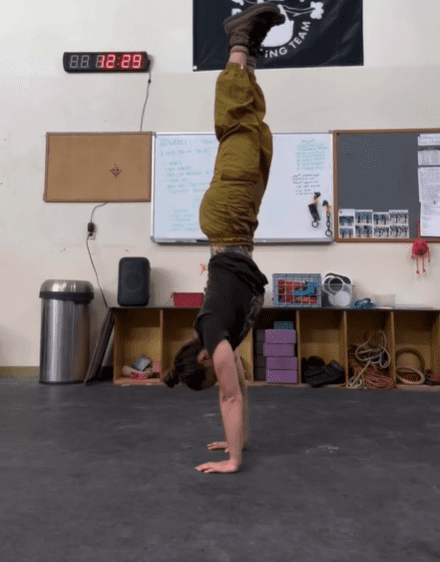
Handstands tend to get written off as a party trick, but they’re actually one of the most well-rounded skills you can add to your training. They build strength, control, and awareness in a way that carries over far beyond just holding a position on your hands.
Whether you’re working on your first wall-supported hold or dialing in balance away from the wall, handstands offer a unique challenge that pays off in a lot of different ways.
Handstands Build Strong, Stable Shoulders
Handstands develop shoulder strength in a way that’s hard to replicate with traditional exercises. You’re not just pushing weight—you’re learning how to support and stabilize your body through your joints.
That kind of strength matters. Strong, stable shoulders help you move with more control on the wall and can play a big role in staying injury-resistant over time. Instead of just pulling all the time, handstands give your body a chance to build strength in the opposite direction, creating better balance overall.
Dial In Core Control
You can’t hold a solid handstand without using your core. From your hands all the way through your toes, everything has to stay engaged and connected.
That same tension shows up in climbing. Whether you’re keeping your feet on during a steep move or staying tight through a tricky sequence, core control makes a huge difference. Handstands train that full-body awareness in a really direct way.
Improve Body Awareness
One of the most underrated benefits of handstands is how much they sharpen your sense of where your body is in space.
Small adjustments matter. Shifting your hips, pressing through your fingertips, or stacking your shoulders all require attention and control. That awareness translates directly to climbing, especially on technical routes where precision and positioning are everything.
Get Comfortable Being Uncomfortable
Handstands challenge you in a different way than most strength exercises. They ask you to stay calm, focused, and patient while you work through something unfamiliar.
That mental side carries over. Being able to stay composed when a move feels uncertain or committing when you don’t feel 100% dialed are skills every climber benefits from.
It Keeps Training Fun
At the end of the day, handstands bring a different kind of energy into your training. They’re challenging, a little frustrating at times, and really satisfying when things start to click.
Mixing in skills like this can keep your routine feeling fresh and give you something new to work toward alongside your climbing goals.
Want to Learn How to Get Started?
If you’ve been curious about handstands or want to build a stronger foundation, we’re hosting a Handstand Workshop at Summit.
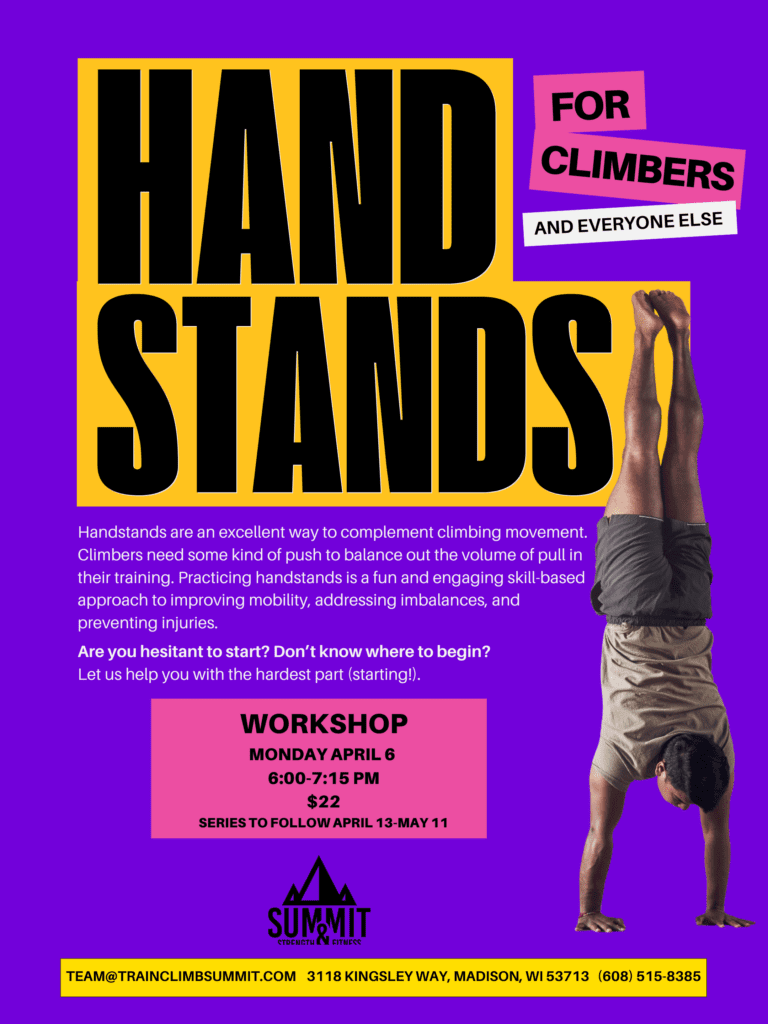
We’ll cover technique, drills, and progressions in a supportive environment, whether you’re brand new or looking to improve your balance and control.
Come learn something new, build strength, and have a good time doing it.
___
In the meantime, feel free check out some of our other posts for more fitness advice for climbers (& everyone else)!
- How to structure your climbing training for success by Keith Kubiesa
- How to increase your climbing grade; it’s an art by Eamon Burke
- How to restart your fitness routine and get back on track Erica Rowoldt