

For most of my life, some form of group workouts have shaped how I move, how I grow, and how I stay consistent.
When I think back on the activities that meant the most to me growing up, I rarely remember outcomes. What I do remember are practices. I remember being surrounded by people working toward something alongside me. I remember the shared nerves before something hard and the relief afterward. The in-between moments are what stayed with me.
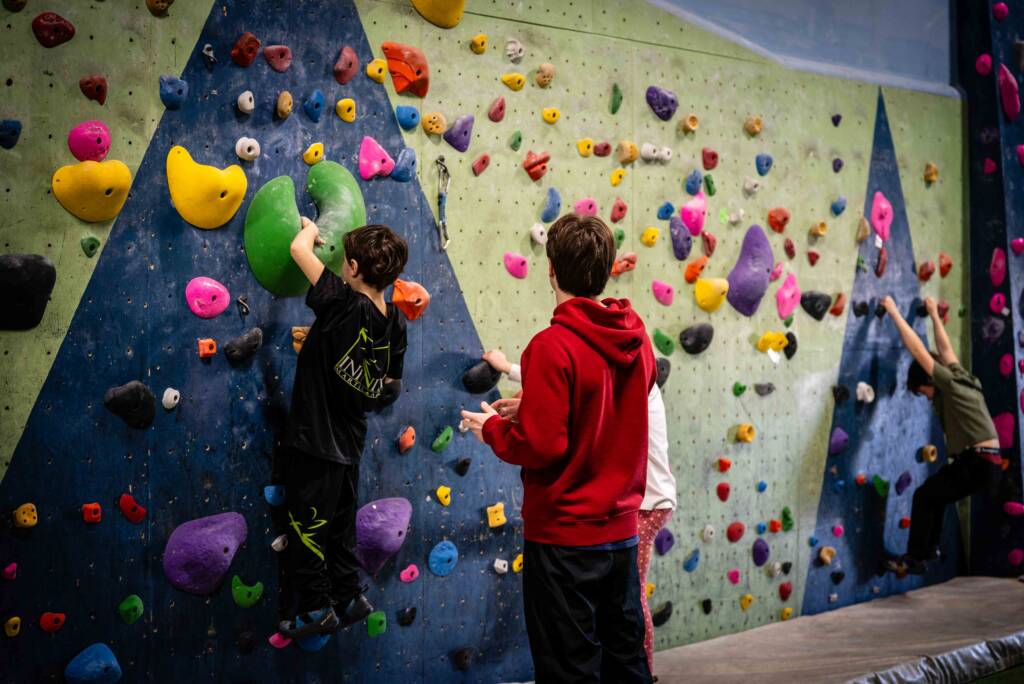
Practicing with the Hoofers Mountaineering Club climbing team at Summit in college reminded me of that feeling. It was a place where, every week without fail, I could simultaneously get out of the house; take a brain break; get a great workout in; and talk to great people. And through this, I was able to expand my community, grow my perspectives on motivation and training, and exponentially increase my excitement to train.
Overall, it taught me that we are not really built to do hard things alone. And it turns out there is science to support that feeling.
The Science Behind Group Workouts
Research consistently shows that people tend to work harder and stay more consistent when they exercise in a group setting. One explanation is something called the Köhler effect, a phenomenon where individuals increase their effort when they believe their performance matters to the group. When you know other people are pushing through the same workout, you naturally rise to meet that energy.
There is also evidence that moving in sync with others increases endorphin release and strengthens social bonding. Studies conducted at the University of Oxford found that synchronized physical activity can raise pain tolerance and deepen feelings of connection. Other research has linked group exercise to lower stress levels and improved mental well-being compared to working out alone.
What stands out to me is that motivation in these settings is not just about discipline. It becomes relational. You show up because you know your coach will be there. You show up because someone you trained next to last week might notice if you are missing. Mostly, You show up because it feels good to be part of something consistent.
My Experience With Team Training
I have felt this dynamic most clearly with the HMC climbing team. Our practices at Summit are structured and focused, but they are also social in a way that makes training sustainable.
There are days when I walk in feeling tired, and someone else’s energy carries me through. There are days when I get to be the one encouraging someone else through a tough set. That exchange builds something bigger than individual performance. It builds momentum. Over time, that shared momentum creates confidence. You trust the process more, and you trust yourself more. You stop negotiating with yourself about whether to train and instead become someone who simply shows up. That consistency is not accidental. It is built through the community.
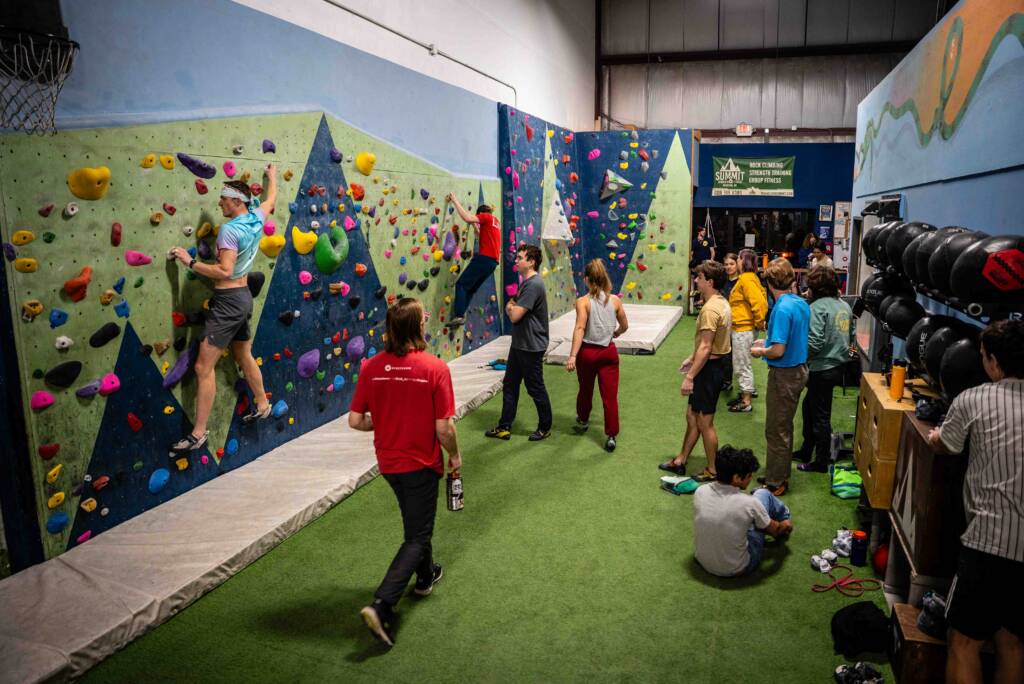
Why Group Workouts at Summit Work
At Summit, group classes are intentionally designed and coached. Whether it is a strength class, conditioning session, or climbing specific training block, there is structure and purpose behind each session.
You are not wandering around deciding what to do next. The programming is thoughtful. The coach provides feedback. The class moves through the session together.
That structure removes a major barrier to consistency. Decision fatigue fades away. Instead of spending mental energy planning a workout, you can invest that energy into actually training.
For climbers, this is especially powerful. Climbing can feel individual on the wall, but the preparation does not have to be. Building strength, mobility, and power in a group setting keeps the process engaging and helps prevent burnout.
For those who are newer to training or unsure where to begin, group classes offer something equally valuable. They reduce uncertainty, and they provide accountability. They create an environment where effort feels shared rather than isolating.

More Than Physical Results
The physical benefits of consistent training are obvious. Strength increases. Endurance improves. Movement becomes more efficient.
But the deeper benefit of group workouts is how they change your relationship with effort.
When you are working through something difficult and someone next to you says you have it, that encouragement lands differently. When the entire class finishes a tough session together, there is a sense of collective accomplishment that lingers.
Community creates consistency, and consistency creates progress. If you have ever struggled to stick with a solo gym routine, it might not be a willpower issue. It might simply be that you were trying to approach something inherently social in isolation.
Group workouts at Summit offer more than a workout plan. It offers guidance, accountability, and connection. In my experience, that combination is what makes hard things sustainable and growth feel possible.
___