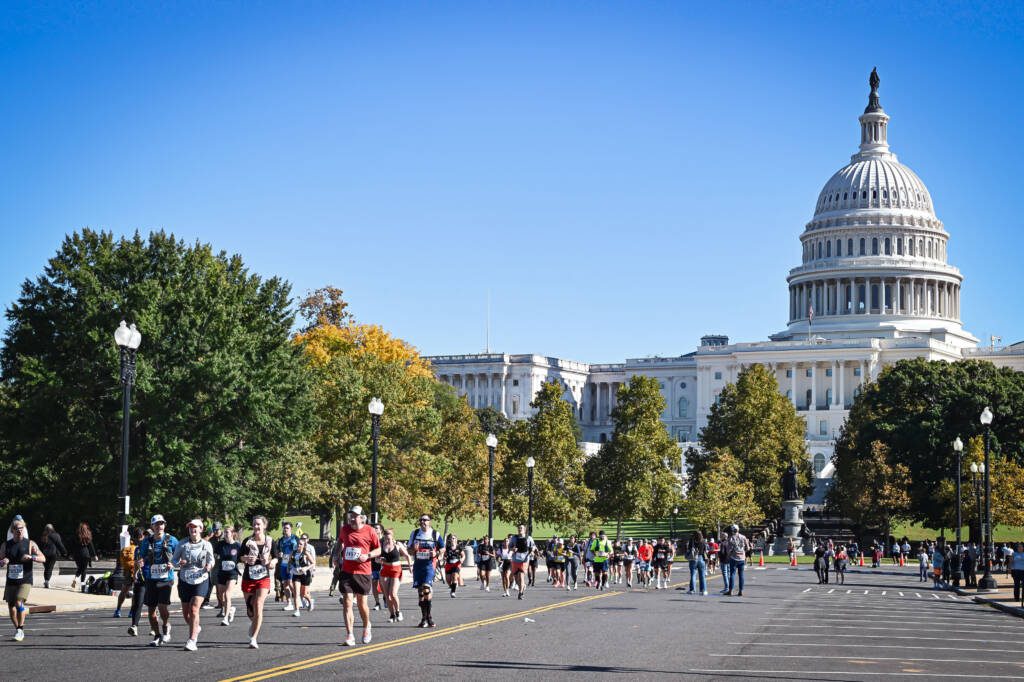

If you had told me a couple of years ago that I would willingly spend months training for a marathon, I probably would have laughed. I was never a runner growing up. In fact, if you’ve read some of my previous blogs, you probably already know that running and I didn’t exactly get along.
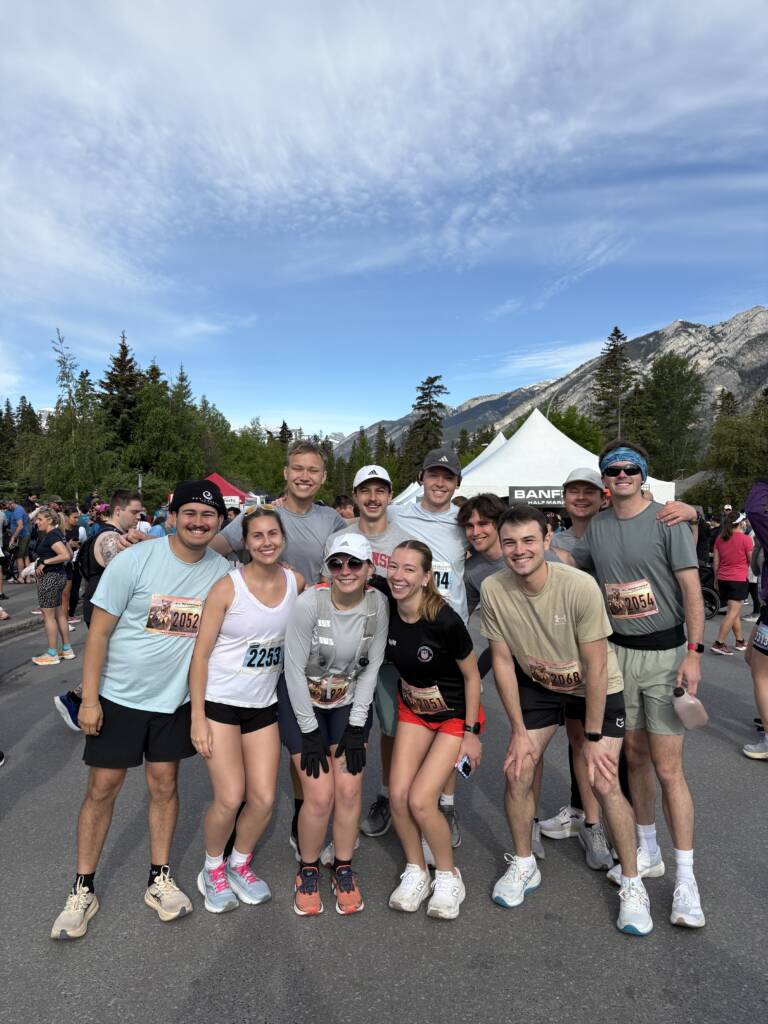
A little over a year ago, I was convinced to run my first 5K. Not long after that, I somehow got convinced to sign up for the Banff Half Marathon with a group of friends. I spent the entire spring training for it, and in early June, I made it across the finish line in one of the most beautiful places I’ve ever had the chance to run.
The race itself didn’t go quite as planned, but the whole experience was an adventure. And apparently, I hadn’t learned my lesson yet, because somewhere along the way I was convinced to sign up for another race. This time, it was the Marine Corps Marathon in Washington, D.C., with my partner and his family.
What followed was several more months of running, a lot of long miles, a few unexpected challenges, and probably more personal growth than I ever expected to get out of a sport I used to hate.
Learning to Make Running Fun
Going into marathon training, I knew it was going to be a big commitment. I wanted to give myself the best chance of finishing the race, so I built a training plan and tried to be as consistent as possible.
The summer and fall were full of travel, time with friends and family, and plenty of other things I wanted to do. I re-planned my training schedule more times than I can count. Things came up, plans changed, and over and over, the run I planned for one day had to move to another. I learned pretty quickly that training for a marathon isn’t perfectly following a calendar. So much of it is just figuring out how to make things work with the life you actually have.
The long runs were the hardest part mentally. Every week, I would look at the upcoming mileage and dread it. I would spend days thinking about how long I was going to be out running, nervous for how it would go and how I would feel. Then I’d actually get out there and do it, and almost every time, it was a much better experience than I expected.
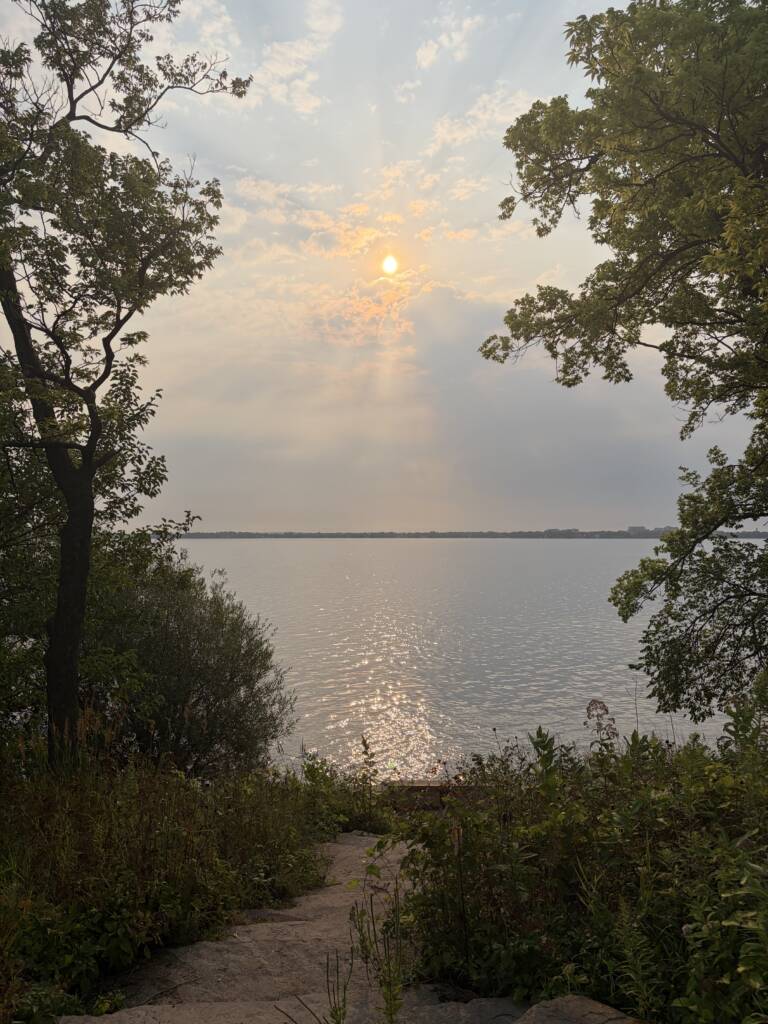
Some of my favorite runs throughout the entire training process ended up being some of my longest. One was an 11-miler that took me around the Wingra Lake loop here in Madison during a gorgeous sunset. Another was a 16-mile run around Wingra and out to Picnic Point on a calm misty day. The mist kept me cool, the scenery was beautiful, and for a few hours, it felt less like a training run and more like a little adventure through my favorite city.
I also started noticing all the little things happening around Madison while I was out running. Beyond the lovely parks and nature, there was always some goofy community event, interesting person, or random little sight that made me smile. And that was really the biggest thing that changed my relationship with running: I learned how to smile through anything.
It sounds simple, but I realized that if I could just force myself to smile, even when I was tired or didn’t particularly want to be running, the whole experience felt different. Something that used to feel like a grueling test of will started to feel like a fun way to spend a day exploring the city.
I still had plenty of runs that were hard, and I still dreaded the long runs. But I started looking forward to the experience itself, rather than just focusing on getting the run over with.
You Can Do Anything for 10 Seconds
One of the most memorable moments of my training happened during my longest run: the dreaded 20-miler.
By that point, I had already run some long distances, but 20 miles felt like a completely different level. I knew it was going to be hard, and I was mentally preparing myself for a very long handful of hours.
Somewhere around mile 15, I noticed something written in chalk on the ground. It was left over from a local running event the day before, and it said:
“You can do anything for 10 seconds.”
The phrase was followed by numbers counting up to 10.
For whatever reason, that really stuck with me. As the run got harder, I started repeating it in my head. I would count to 10, start over, and do it again. Instead of thinking about how many miles I had left or how much longer I had to keep running, I just focused on getting through the next 10 seconds.
It helped me get out of my own head and into a much better mental space than I had experienced during some of my earlier long runs. Despite the increasingly painful blisters and joint aches from mile 17 onward, I felt more grounded, less overwhelmed by the distance ahead of me, and surprisingly capable of continuing.
I kept coming back to that phrase throughout the rest of the run, and even after I finished, it stuck with me. It became a little reminder that I could break down something intimidating into much smaller, more manageable pieces.
I didn’t know it at the time, but I would end up needing that reminder again before race day.
An Unexpected Setback Before the Marathon
About two weeks before the marathon, I started experiencing some pretty intense pain in my teeth and jaw. It got progressively worse throughout the week, so I made an appointment with my dentist.
They thought it was likely related to my wisdom teeth coming in and shifting around. I was told the pain should eventually subside, but that I should prioritize getting them removed to avoid more problems down the road.
I had a consultation with an oral surgeon two days later, but by then, the pain had gotten significantly worse. The earliest appointment they had available was three weeks away. I was absolutely heartbroken.
The pain was all-consuming and easily the worst I had ever experienced. I had just been told that I would have to manage it with ibuprofen and ice for another three weeks, hoping it would eventually get better. With the marathon only a couple of weeks away, I had no idea if I would even be able to run.
Then, a few hours after my appointment, half of my face started swelling up like a balloon. Some swelling near the painful area would have made sense, but when it started spreading up toward my eye, I knew something was seriously wrong.
I went to urgent care, where they confirmed that the tooth was infected. It was likely infected for much of the time I had been experiencing the pain, which explained why things had gotten so bad.
Thankfully, getting that diagnosis meant I could finally do something about it. I started antibiotics and was able to call the oral surgeon back and get an emergency appointment within the next couple of days.
There was just one problem: my surgery was now scheduled for six days before the marathon.
I was terrified. I had spent the better part of a year working toward this race, and suddenly, something completely outside of my control threatened to derail all of it. I had no idea how recovery would go or whether I would be able to run.
When I went in for surgery, they decided to remove only the infected tooth to give me the best possible chance of recovering before race day. My original appointment to have the remaining wisdom teeth removed was still on the calendar for after the marathon.
Luckily, recovery went well. I spent a lot of time resting, eating soft foods, and watching movies, and slowly started feeling like myself again.
Still, after such a whirlwind, I wasn’t exactly feeling confident going into race weekend.
Marathon Weekend in Washington, D.C.
By the time I boarded the plane to D.C., I was still recovering from surgery. I had stitches in my mouth that made it difficult to eat anything and a lightly bruised face. I had missed some of my final training runs, and the only running I had done in the days leading up to the race was a quick, easy mile to make sure I still remembered how. Even just walking around the city the day before the marathon made me feel tired. I started wondering whether I had pushed myself too hard trying to recover in time.
My goal for the race had always been pretty simple. I didn’t have a particular pace or finish time in mind. I just wanted to finish. But after everything that had happened, even that started to feel uncertain.
And then it was race day.
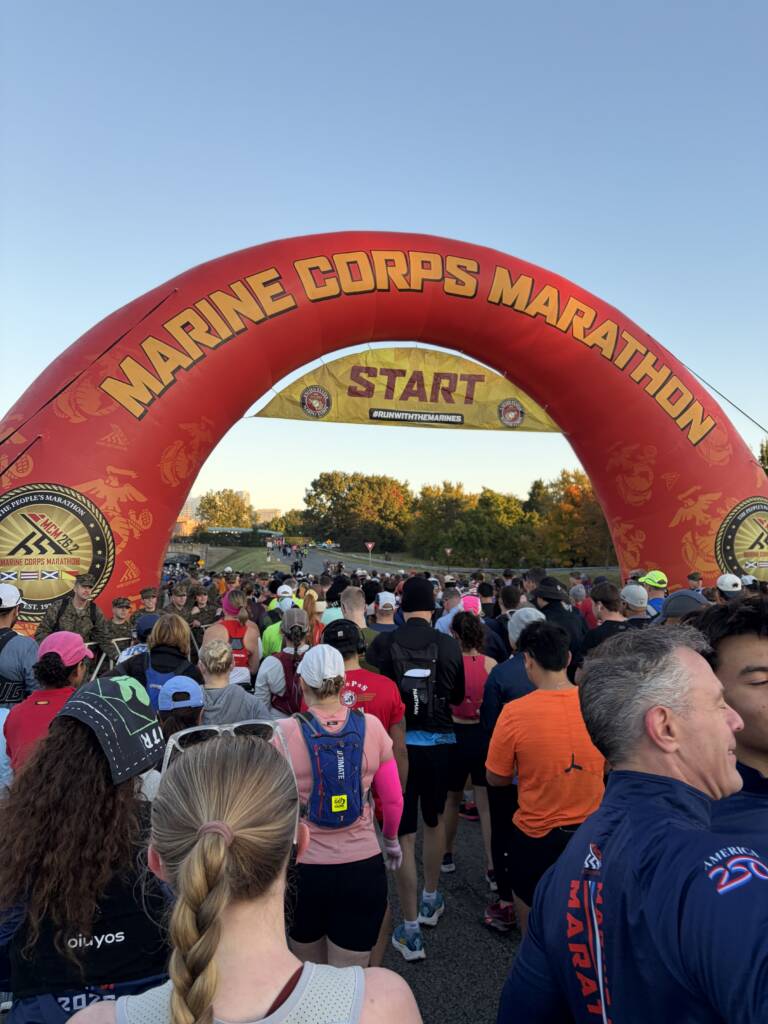
After months of training, planning, re-planning, struggling through long runs, and dealing with a whole lot of unexpected chaos, I was standing at the starting line of the Marine Corps Marathon. I was freezing cold, nervous, and had absolutely no idea what the next several hours were going to look like. But once I started running, things began to feel okay.
The first mile or two of the Marine Corps Marathon takes you along a highway. There’s a pretty nasty hill, and not much in the way of spectators to keep you entertained. I remember thinking that I might have gotten myself into something I wasn’t quite prepared for.
But after that initial stretch, you turn into the city for the first time, and everything changes. I could hear the crowds cheering, and I immediately felt tears starting to well up in my eyes. I was hit with this huge wave of pride and disbelief. I knew, in that moment, that this was what all of it had been for.
All the months of squeezing runs around life and squeezing life around runs. All the long weekends, the early mornings, the constantly changing schedules, and the time I had dedicated to training. All the other hobbies I had put on hold to make this goal remotely possible. This was it.
Then I remembered I was only at mile two of 26, so I probably shouldn’t start crying just yet.
26.2 Miles Later
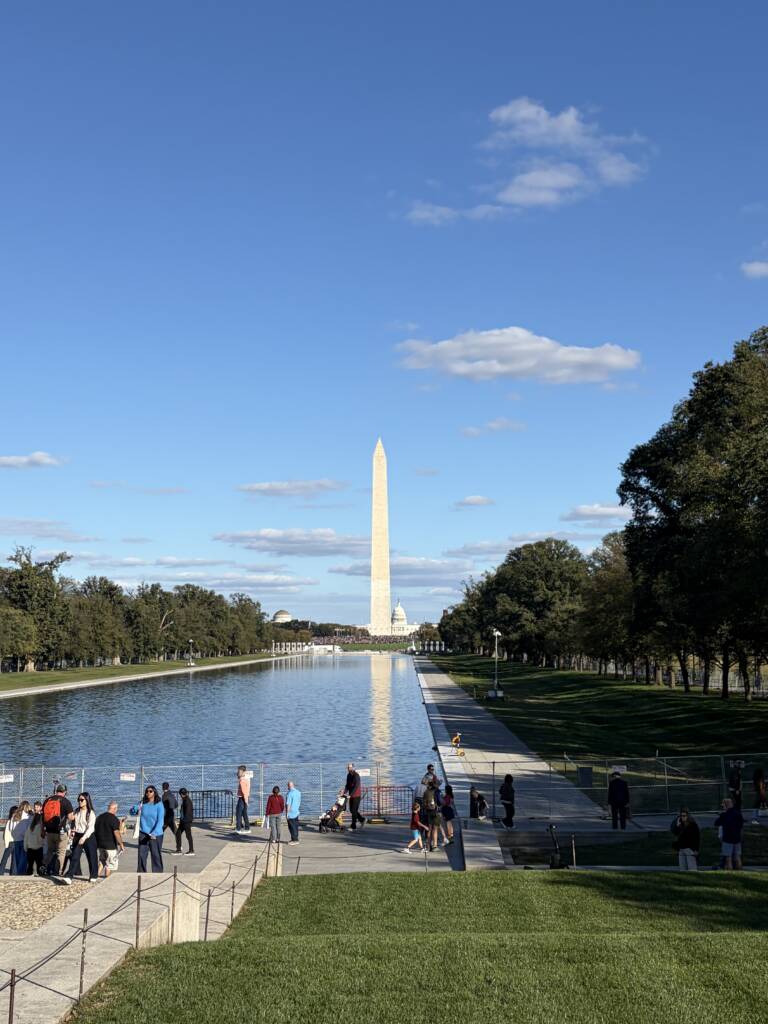
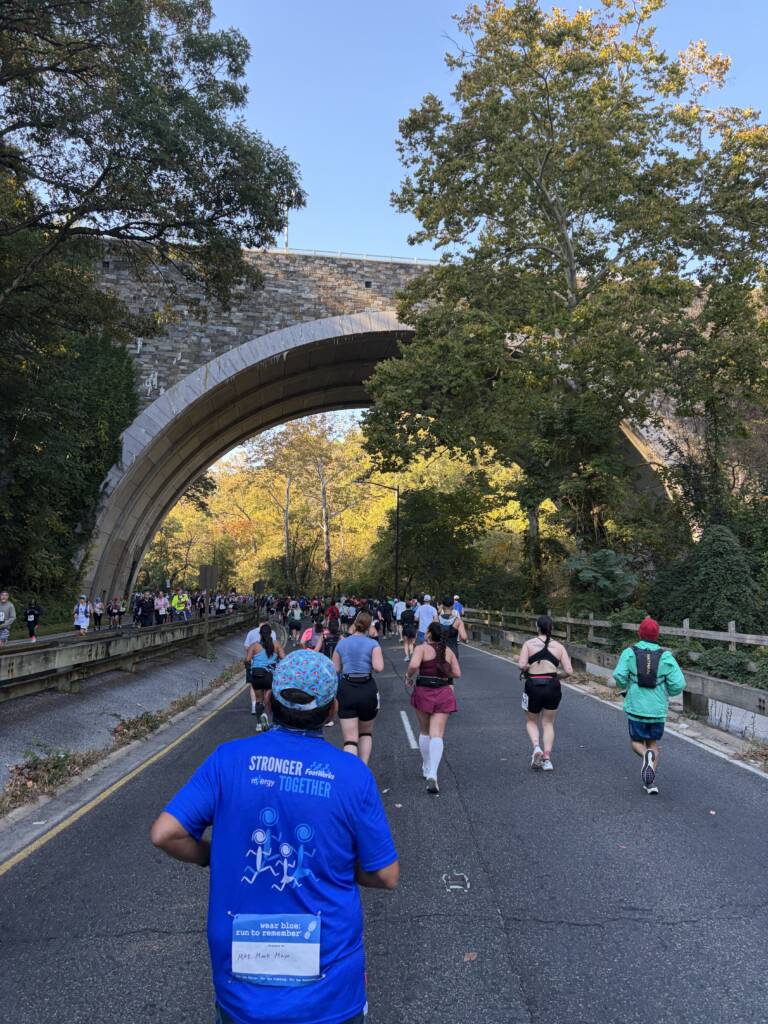
The rest of the race is honestly a bit of a blur. The course was absolutely beautiful, and running through D.C. was such a cool experience. There were a few tricky sections, like sun-exposed highway bridges without spectators; but I enjoyed the journey, nonetheless.
One of the most memorable parts of the course was the silent mile honoring Marine Corps members who lost their lives in service. It was uniquely beautiful, heartbreaking, and motivating all at once. It gave me a moment to think about something much bigger than my own race and appreciate the meaning behind the event.
Reaching the halfway point was another interesting experience. On one hand, I was excited to know I had made it that far. On the other, I realized I still had to do all of that work again before I could stop. It was a little bit encouraging and a little bit devastating.
The crowds made a huge difference throughout the race. Any time I reached a section with a lot of spectators cheering, everything felt easier again. I loved seeing people out supporting the runners, reading their silly motivational signs, and cheering loud.
Outside of walking through the hydration stations, I consistently ran the entire race at a comfortable pace. I crossed the finish line with a time I would’ve been really proud of even without everything my body had been through that week.
And just like that, I had run a marathon.
I finally understood why some people run one of these races and immediately want to do another. There’s something incredibly fulfilling about working toward a goal for so long, pushing through all the difficult parts, and eventually getting to experience the thing you’ve been working toward.
A New Appreciation for Running
Looking back, I’m really grateful for everything I learned over the past year.
I went from someone who had never really considered themselves a runner to someone who voluntarily spent months training for a half marathon and then a full marathon. I can confidently say that I no longer hate running. In fact, I genuinely appreciate it.
The training process was unlike anything I had experienced before. It taught me a lot about consistency, patience, and what I’m capable of when I commit to something. It also taught me that things don’t always go according to plan, and sometimes the most important part of reaching a goal is figuring out how to keep going when they don’t.
Crossing that finish line was one of the most fulfilling feelings I can imagine. I set a goal, worked toward it for an entire year, dealt with plenty of challenges along the way, and actually did it. I am so incredibly proud of that.
I don’t see myself signing up for another marathon anytime soon. I think I’ve earned a little break from 20-mile training runs. But I do want to keep shorter runs as part of my regular routine as I transition back into climbing, lifting, and all the other things I put on hold while training. I’m looking forward to this next chapter and having some new goals to chase.
If there’s one thing I hope you take away from my experience, it’s that you’re probably capable of a lot more than you think. Sometimes you just need to give yourself the chance to find out. Even when things don’t go according to plan, even when you have to start over or change direction, and even when the goal feels completely out of reach, you might be surprised by what you can accomplish.
You can do anything for 10 seconds. And you can do most things for a whole lot longer than that, too.
At Summit, we’re big believers in training for the things you want to do outside the gym. Whether you’re working toward a marathon, a climbing goal, a big adventure, or just feeling stronger in your everyday life, having something to work toward can make all the difference. Whatever your goal looks like, we’ll help you build the strength and confidence to chase it.