

Resistance bands don’t get the credit they deserve. Unfortunately, many people use them only for warm-ups or active recovery, implying they don’t deserve a place in the main workout. A study from 2019 proves this untrue. This study compared resistance bands with traditional strength equipment, including weight machines and dumbbells. Results show that when directly compared, resistance bands provide similar muscle and strength gains as traditional strength equipment.
Benefits Aside from Muscle Gain
We will get to the benefits that resistance bands provide in the gym when it comes to gaining strength and crushing goals. First, let’s talk about some of the obvious but often overlooked benefits that resistance bands provide outside of the direct workout.
Resistance Bands are Portable
A few years ago, I was a nurse at a summer camp. During this time, I did not have access to a gym. I had spent years prior building strength and I didn’t want to lose progress. Obviously, I couldn’t fit my squat rack in the tiny cabin I would be residing in. I know the benefits and opportunities that come with bodyweight strength training, but I was also looking for some variety. Insert resistance bands! Literally all of the resistance bands I own and need fit into a cinch backpack. During this time, I put them in my running vest, ran to an open field and got a super challenging workout with only resistance bands as equipment.
Resistance Bands are Budget Friendly
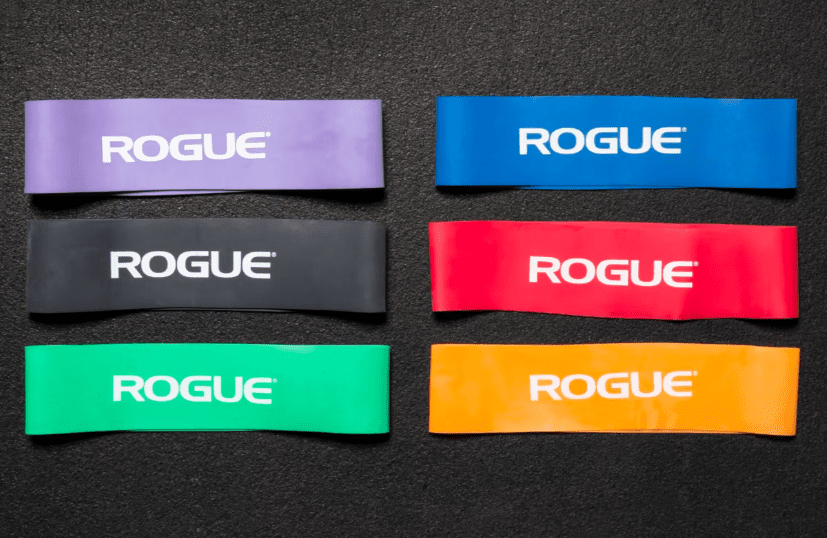
Resistance bands are easy to find and highly budget-friendly, especially compared to traditional strength equipment. Rouge is a very reputable brand. Their 9 inch loop band set (which comes with 6 bands of different resistance) is only $20! I have had these in my home gym for the past 2.5 years. They are durable and still provide the promised resistance even after years of use.
Resistance Bands Provide a Challenge
The world of opportunity that resistance bands provide is what makes them so versatile and beneficial. They offer a resistance (duh) challenge for strength benefits, a stability challenge for balance benefits and muscle activation which is key for getting the most out of each workout session.
Resistance
Resistance bands provide constant tension through the entire range of motion. A major benefit to this is the ability to target muscles through different angles and planes of motion. Check out this video, where a resistance band is used to build lower body strength with a hamstring curl.
Additionally, because bands are portable and adaptable, you can easily adjust resistance levels and movement patterns to isolate specific muscle groups or mimic sport-specific actions.
For example, a common exercise to mimic the stride of running is a band-resisted knee drive. The band is looped around and anchored under our feet. One leg at a time, you drive your knee upward, creating tension on the band. This forces your hip flexors and core to work harder to maintain control. This directly strengthens the muscles responsible for forward propulsion of running and improves the power of your stride.
Stability and Activation
The elasticity of the band provides an element of instability, forcing smaller stabilizing muscles to engage to control each movement. This added stability demand improves balance and coordination.
Resistance bands are a great tool to use at the beginning of a workout to initiate muscle activation. With this, the muscles are “turned on” so to speak, to allow for better engagement throughout the remainder of the workout.

Resistance Bands Allow for Modifications
Instead of adding resistance to make a movement harder, bands can be used to assist your body, effectively reducing the amount of weight you need to complete the movement. This is essentially the opposite of how you would use it for strength training. The more resistance allows for higher modification and “easier” exercise.
For example, one of the most practical ways to use this approach is with pull-ups. Looping a band around the bar and placing your foot or knee inside creates upward assistance, offsetting a portion of your body weight. As you gain strength, you can progressively move to lighter bands until you no longer need the assistance.
This same theory can be applied to push ups. Check out the Summit Strength and Fitness Youtube page for more resistance band exercises!
Types of Resistance Bands
Different exercises call for different types of bands, and understanding their size and purpose can help you choose the right tool for the job. Longer loop bands, often around 41 inches, support movements that require a greater range of motion or assistance. Anchoring them overhead or under your feet lets you perform exercises like assisted pull-ups, banded squats, or mobility drills. Their length gradually builds tension, making them versatile for strength training, support, or assisted movements depending on the setup.
Smaller loop bands are usually about 9-12 inches. These compact bands activate muscles and build stability through exercises like lateral walks, monster walks, glute bridges, and warm-up drills.Their smaller circumference creates immediate tension, which is perfect for targeting smaller muscle groups like the glutes and hips. Because they’re quick to put on and easy to adjust, they’re often used to “wake up” muscles before a workout.
Different colors are different resistance strengths. The green band I am using in the above photo is 40 lbs of resistance. Since I am using it to assist in a pull up, it is offsetting my body weight by 40 lbs.
Next time you see a resistance band hanging on the gym wall give it the attention it deserves! The opportunities are endless. Don’t be afraid to get creative.
What is your favorite way to use resistance bands? Share below to inspire others!