

You might be familiar with growth mindset, self-improvement, self-help, neuroplasticity, and habits. Have you heard that your brain isn’t fully developed until 25-28? Or the phrase “can’t teach an old dog new tricks?” Learning new skills as an adult is hard. But the reality is we change throughout our entire lives and the ability to learn is a skill in and of itself.
Learning New Skills Doesn’t Stop After 25
It is true that this is far easier and more passive when we are young. During childhood we have focused attention, guidance and a supportive environment. Kids have a natural gift of humility. They let go of limiting beliefs and ask for help. Despite all of those things, we are all able to adapt and change at any stage in our lives.
Climbing, in addition to the personal training that I do, is a great vehicle for exploring this concept. I am privileged to be able to offer support and witness transformation for people who seek it out. Coaching may seem to be a 1-way street, but for anyone who has worked with kids (or dogs) you not only learn but receive almost as much, if not more, than you what you provide.
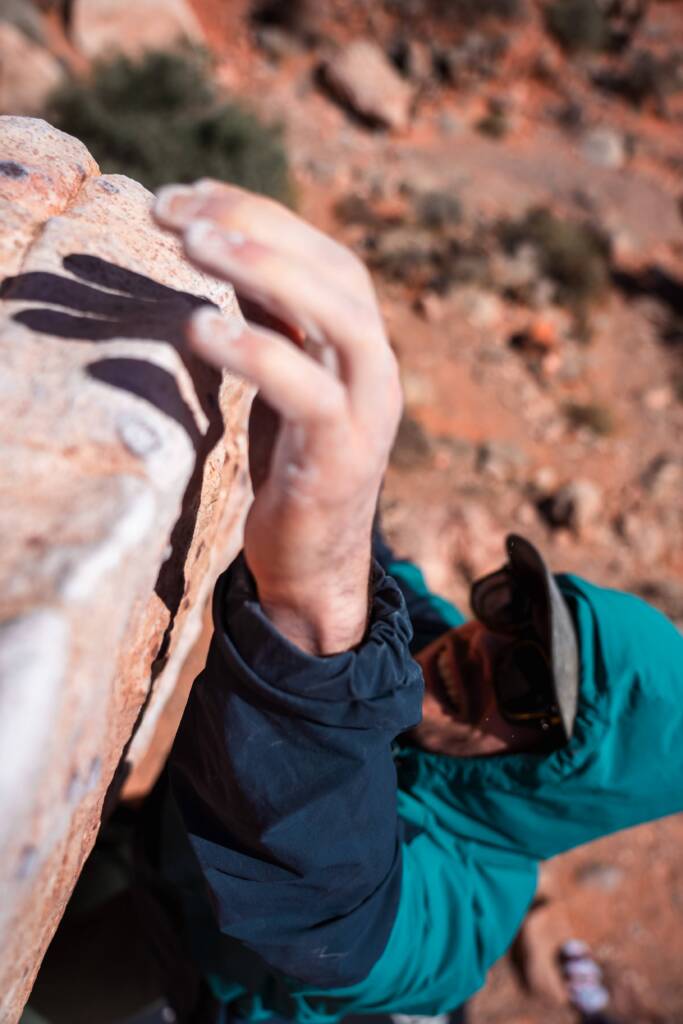
What It Really Means to Be Coachable
This works best if one is coach-able. Being “coach-able” is just another way of describing the ability to ask questions, receive guidance, take in feedback and apply it in the process of learning any new skill. Learning new skills and being coach-able doesn’t only apply to climbing. It also does not necessarily mean you are working with someone else.
Learning New Skills Independently vs. With Guidance
One of my favorite books is called “The Self-Coached Climber” which is an excellent resource for anyone who is independent, and finds climbing to be intuitive, but is looking for a little structure for their skill development. Another word for self-coached is autodidact. A quote I often cite is “if you want to go fast, get a coach. If you want to go deep, learn independently.” If you want my advice on learning new skills, combine the two and get the best of both.
Break it down: A Smarter Way of Learning New Skills
As you’ll see in the video, we break down a fundamental climbing technique into its components. It’s helpful to drill down and focus on bite-sized motor patterns and then later re-integrate them. Shelby is a (self-described) intermediate climber who is also a very skilled coach and personal trainer. Recently, she asked me for guidance. Her goals are to move more efficiently and avoid relying on her considerable strength and being so arm dominant on the wall.
Why Strength Alone Won’t Help You Learn New Skills
One of the most common pitfalls for climbers is plateauing at a certain stage and thinking, “I just need to get stronger!” While it is true that strength gains can absolutely translate to improved performance on the wall, it is a mistake to prioritize this over optimizing technique. I learned this lesson early on when hitting my first plateau.
Three years into climbing I learned that strength only goes so far. After the “newbie” gains halted and my progress faltered in the V3/V4 realm, I finally set aside my stubbornness and resigned to seeking guidance. Even then my first thought was, “I just need to get stronger!” Only after coming to Summit Strength and Fitness and taking a movement class with Coach Kubi did I realize that I was just doing pull-ups on the wall.
My Turning Point: From Strength to Skill Development
My obsession for climbing then transformed into an obsession for learning everything about technique and training. I became obsessed to the point where I decided to quit my day job and do this full time, but that is a story for another time. If this resonates with you at all, please take the time to watch our YouTube video. In addition to learning a helpful technique, learn from Shelby’s example, as I continue to do so. When learning new skills, remember to apply humility, overcome limiting beliefs, and don’t lose the ability to ask for help.