

For a long time, I didn’t fully realize how much the impact of the outdoors and mental health. I just knew that I always felt better after a day outside. Not the kind of better that magically fixes everything. But quieter, lighter and more grounded. Like my brain could finally unclench for a while.
I think most people dealing with ADHD, depression, burnout, or just the weight of everyday life understands that feeling. Your mind gets loud and you overthink everything. You feel stuck in your own head and some days even simple tasks feel exhausting. Somewhere along the way, the outdoors became one of the few places where all of that softened for me.
Whether it’s rock climbing, fly fishing, disc golfing, snowboarding, or honestly just relaxing by a bonfire with good company. There’s something incredibly healing about these experiences.
Learning from the Outdoors and Mental Health
Learning Mindfulness through Rock Climbing
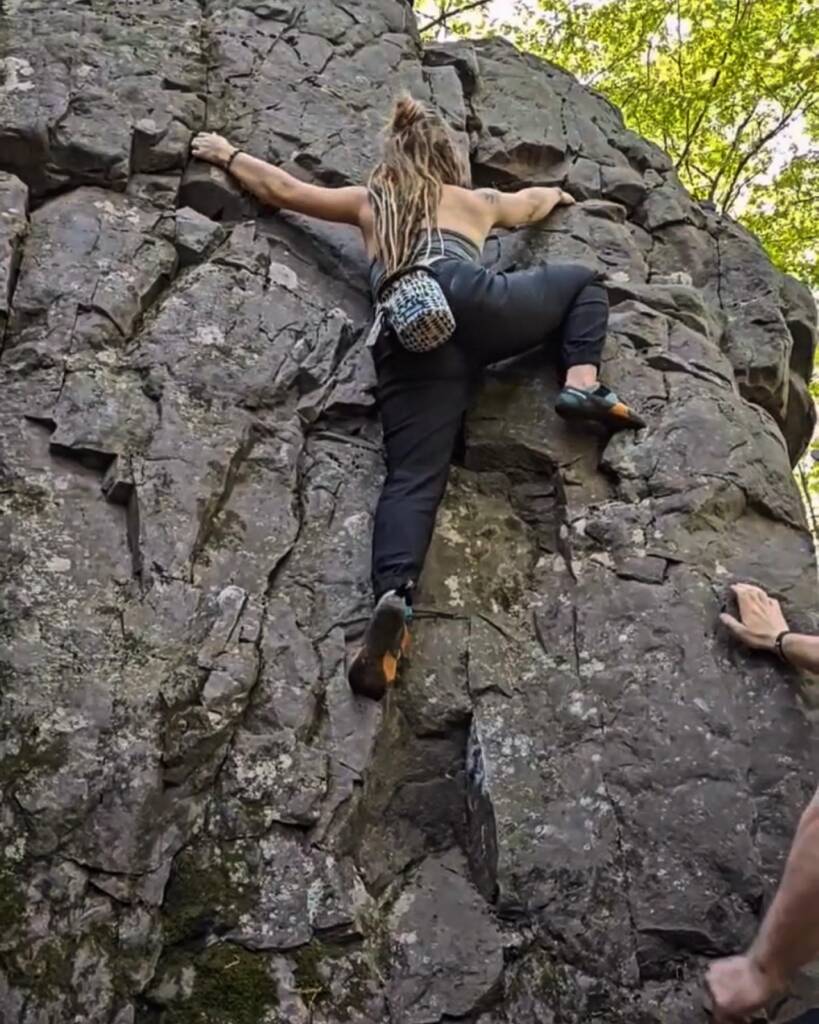
One of the things I love most about climbing is that it demands your full attention. When you’re on the wall, you can’t focus on your stress, your phone notifications, your anxiety, or the million running tabs in your head. You focus on your movement and your breathing.. The next hold, and figuring out the problem in front of you requires full attention.
For someone with ADHD, that kind of focus feels rare. It’s one of the few times my brain feels fully locked into the moment instead of bouncing between ten different thoughts at once. Beyond that, it’s satisfying overcoming something so challenging. You fall, you regroup, you try again, and eventually you figure it out.
Disc Gold Remind Me That It’s Okay To Be Silly
Disc golf is exponentially underrated when it comes to activities in the outdoors and mental health. You’re outside hiking for hours through parks or woods, hanging out with friends. There is laughing at the rough tosses, celebrating good ones, and competing just enough to stay engaged without taking it too seriously. That combination of movement, nature, and community without a ton of pressure attached is so refreshing.
It is opposite to what American society is being pressured to do. It is an activity that reminds me that not every workout has to be intense, not every hobby has to become a side hustle and not every moment needs to be optimized. Sometimes you just need to go fling some plastic through the woods with your friends and laugh a little.
Learning to Slow Down with Fly Fishing
Fly fishing is almost the opposite kind of therapy for me. It forces patience. You spend hours standing in moving water listening to nothing but the river, the wind, and your own thoughts slowly quieting down. There’s no rush and no pressure to constantly produce or achieve something. Just a meditative rhythm of cast, drift, breathe and repeat.
Some of my clearest thoughts have come while standing waist-deep in a river or stream with absolutely no way to reach me. And while there’s nothing like battling a feisty trout on the end of your line, often times the real value is disappearing into nature for a day to reset. The proof that the outdoors and mental health are so intertwined.
Snowboarding Makes Me Feel Alive
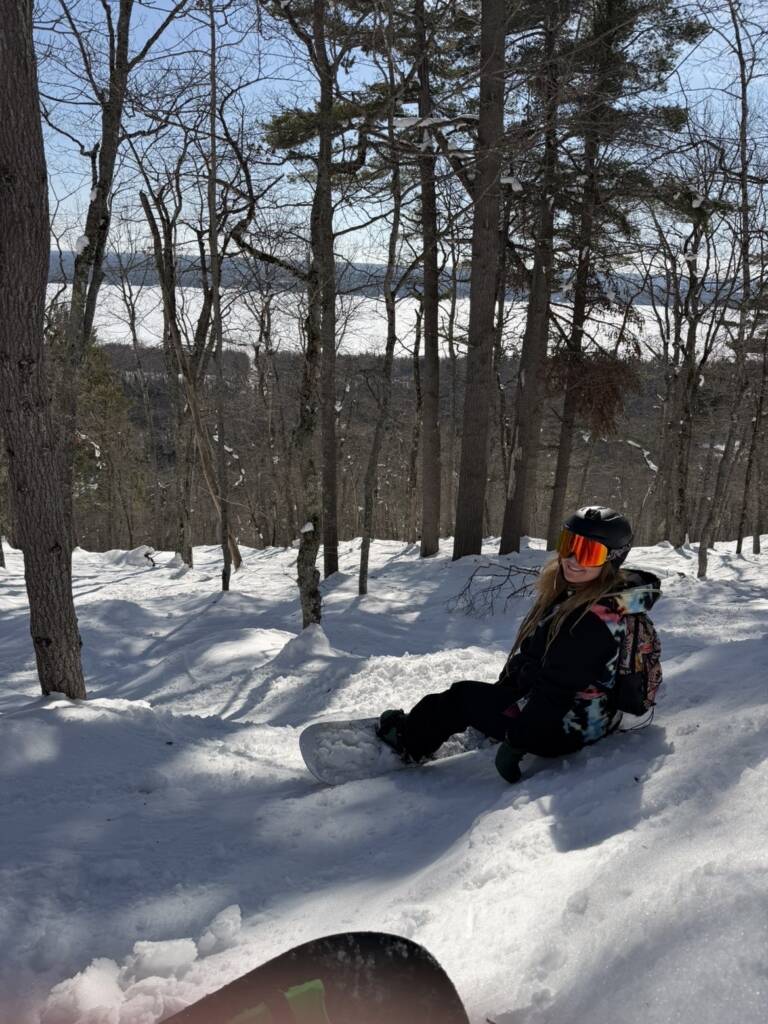
Snowboarding has always been one of the fastest ways for me to get out of my own head. The crisp cold air, music in your headphones, and carving down a mountain resets my entire nervous system. It demands focus, but it also feels incredibly freeing in a way that’s hard to describe unless you’ve experienced it. I find myself yelling out in joy every single time I’m out there.
Snowboarding constantly reminds you that progress is messy, so even falling is part of the process. You wipe out, you laugh, you get back up, and eventually the things that once felt impossible become second nature. That lesson translates to life more than people realize. When resilience is practiced, it builds.
Using Community to Strengthen Outdoors and Mental Health
All these sports have been so incredibly important to me and my mental health. Not only the activities themselves, but the communities around them are also invaluable. Depression isolates people. Anxiety makes people withdraw. ADHD can make people feel misunderstood or insignificant. Outdoor communities tend to break down those walls naturally.
Climbers encourage complete strangers and hype up even failed attempts. Fly anglers share stories and advice like old friends. Disc golfers invite random people into their rounds. Snowboarders share this unmatched stoke and celebrate each other’s progress no matter the skill level.
You don’t have to show up perfect or even with any confidence at all. The only thing that matters is you show up.That’s the kind of support we all deserve to experience. I often think about how much more I’ve experienced this since joining the Summit Crew and couldn’t be more thankful for our community here.
Why The Outdoors and Mental Health Are Deeply Connected
I’m sure there’s science behind all of it. Sunlight, exercise, fresh air, dopamine, nervous system regulation. All those things absolutely play a role. But the outdoors reconnects us to parts of ourselves we lose in everyday life.
It reminds us to play again. To move, to breathe deeper. It reminds us that its okay to struggle a little and be uncomfortable at times. And maybe most importantly, it reminds us that life exists outside of work stress, social media, bad news, and endless notifications.
Using Nature to Take Care of Yourself
I’m not saying the outdoors are a “cure all” for mental health. Therapy, support systems and self-care all matter. But I do strongly believe the outdoors can be an incredibly powerful part of healing.
For me, these activities have provided structure during hard seasons. Like friendships when I felt isolated, confidence when I doubted myself, and moments of peace when my brain felt overwhelmed.
Sometimes all it takes is getting outside, moving your body, and being around good company to remember that you’re doing better than you think.
Tell us! What is your favorite way to spend time outdoors while boosting your mental health?