

At Summit Strength & Fitness, one of our missions is training for a lifetime of movement. We talk a lot about strength, mobility, resilience, and building a body that allows us to keep doing the things we love for as long as possible. But sometimes, the best examples of what that really means aren’t found in a training plan or a workout program. They’re found in the people around us who have spent a lifetime simply showing us how it’s done. Like Grandpa Poppy.
Poppy is one of those people who will make you think differently about what it means to grow older. He skied until he was 92 years old and played pickle ball until he was 96. Those numbers are incredible on their own. But what inspires me most isn’t how long he was able to participate in those activities. It’s what he has done as those activities have eventually become more challenging. He has never seemed interested in letting the things he can’t do define what comes next. Instead, he simply finds something else to enjoy.
Even now, Poppy is still getting out and living his life. He loves listening to jazz bands. If there is music playing, there is a good chance he will be dancing. He finds reasons to get together with people, celebrate, laugh, and enjoy the moment. There is an optimism about him that I have rarely experienced in another person. He takes so much pride in the life he has lived. Not only that, he also seems just as excited about the life he still has ahead of him.
Training for a Lifetime Equals a Lifetime of Memories
One of the things I love most about Poppy’s story is that his relationship with movement wasn’t only about staying active himself. It was about bringing the people he loved into those experiences with him.
When his children and grandchildren were growing up, skiing was an important family tradition. My Husband recalls many Christmases where Grandpa Poppy and Grandma Barb would buy the grandchildren ski lessons. I imagine at the time, it probably just felt like another Christmas gift. But looking back, those lessons became something much bigger. They gave his family a shared hobby. A reason to spend time together, and countless memories that have continued long after those original ski lessons were over.
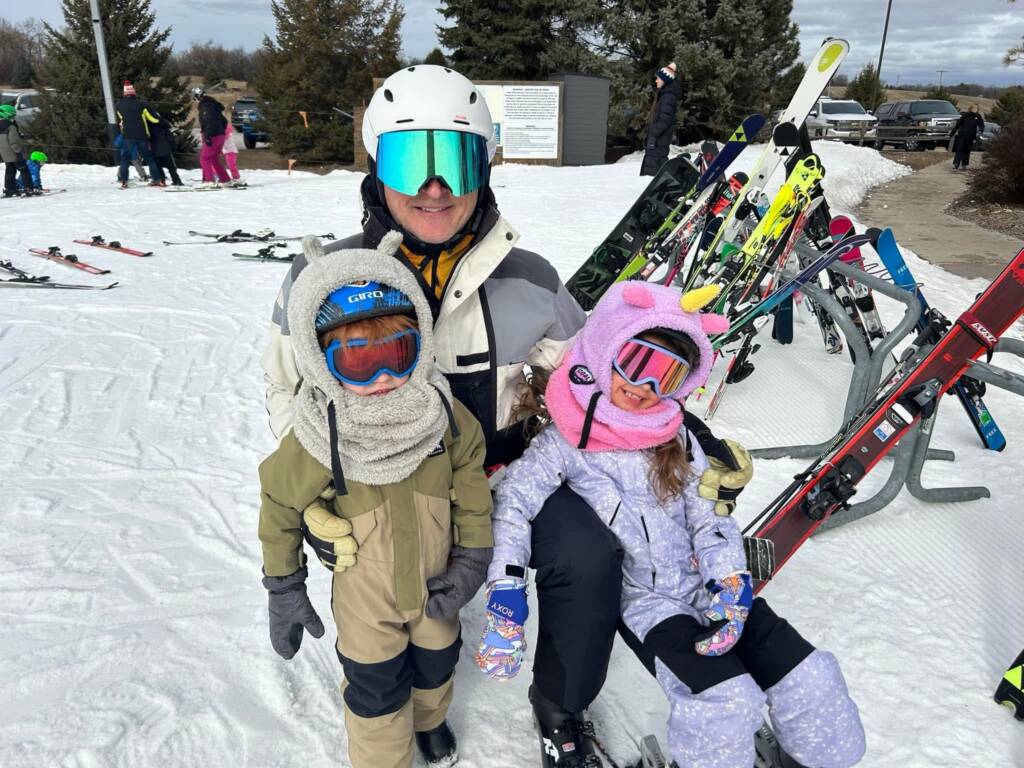
To this day, the entire Fischer family still gets together for family ski days. There are now multiple generations of the family out on the mountain together — children, grandchildren, and great-grandchildren all skiing and sharing something that Poppy helped create decades ago.
Poppy has retired from skiing himself, but that doesn’t mean he has stopped being part of those days. These days, you’ll find him sitting in the lodge, watching his children, grandchildren, and great-grandchildren shred the slopes. When you see the pride on his face as he watches them, you realize that the skiing has always been more than just skiing. It was about creating something that would carry on long after he was finished making turns himself.
What Does It Really Mean to Train for a Lifetime?
At Summit, we train climbers, hikers, trail runners, skiers, snowboarders, mountain bikers. Pretty much anyone who simply wants to feel strong and capable in their everyday lives. We love helping someone get stronger, improve their mobility, prepare for an adventure, or accomplish something they weren’t sure their body could do. Those goals matter, and they’re a huge part of why we do what we do. But we’re also trying to build something that lasts beyond the next goal.
The reality is that our bodies change. Our interests change. Our abilities change. The things we can do at 30 may not be the things we want to do at 60, and the things we do at 60 may look completely different at 90. That isn’t something we should fear or see as failure. It’s simply part of being human.
Training for a lifetime of movement doesn’t mean being able to do the same things forever. It means building the strength, mobility, balance, resilience and confidence, to continue adapting as life changes. Giving yourself the best possible opportunity to keep participating in the activities and experiences that make life meaningful. It means when the time finally comes when you feel those activities are out of reach, you know you’ve given it your best and enjoyed it every step of the way.
Maybe that means climbing a new route or skiing with your kids. Or maybe it’s hiking a trail you’ve always wanted to explore. Maybe it’s playing pickle ball with your friends. And eventually, maybe it’s a night out for a jazz band and getting up to dance.
Movement doesn’t have to look the same at every stage of life to still be meaningful.
Keep Finding Your Way Forward
I think Poppy has taught me (and many of his friends and family) that the goal isn’t necessarily to stay young. The goal is to keep living.
As we get older, there will inevitably be things we have to let go of. There will be sports we retire from, mountains we no longer climb, and activities that our bodies simply aren’t ready for anymore. That doesn’t mean we have to stop looking for ways to move, explore, connect, and have fun.
Poppy has shown what it can look like to embrace that instead of fighting it. He skied for as long as he could. He played pickle ball for as long as he could. And when those chapters eventually came to an end, he didn’t decide that his adventure was over. He continues to find things to enjoy.
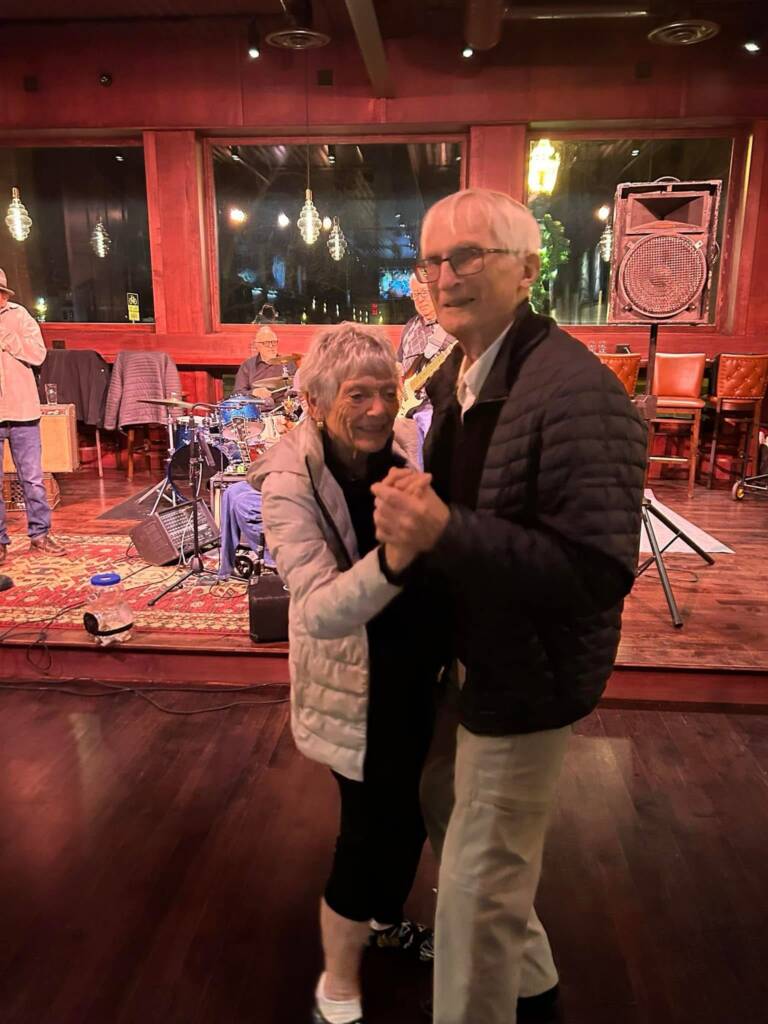
Poppy still goes out. He is still listening to music, dancing and spending time with the people he loves. And he still shows up at the ski lodge to watch the next generations of his family enjoy something he helped make part of their lives. There is something incredibly beautiful about that.
He may not be the one skiing down the mountain anymore, but he is still part of the experience. He’s watching his children, grandchildren, and great-grandchildren create their own memories together and there is something incredibly powerful about seeing a family tradition continue through generations.
Training for a Lifetime of Movement is the Goal
When we say “training for a lifetime of movement”, we’re not saying that you need to stay strong enough to do everything forever. We’re saying that we want to help you build a body and a mindset that can adapt to whatever life brings.
We train to have more adventures, but we also train to continue having experiences with the people we love. We train so you can carry the backpack, climb the mountain, get on the ski lift, play with your kids, chase your grandchildren around, or simply feel confident getting out and enjoying your day.
And when one activity eventually becomes too much, we hope you have the strength and mindset to ask, “What can I do now?” Then find the answer and go do it.
Poppy is a reminder that a lifetime of movement isn’t really about a number, a PR, or even a particular sport. It’s about having the ability and the desire to continue participating in your own life and Poppy is nowhere near stopping.
Someday, I hope we’re all lucky enough to sit in a lodge, watching the people we love experience something that we helped pass down to them. I hope we can look around at the memories we’ve created, the people we’ve shared them with, and feel the same pride Poppy feels when he watches his family.
Ultimately, we aren’t training just for what our bodies can do today. We’re training for all the years, adventures, memories, and moments that are still ahead. We’re training for a lifetime of movement.